

Sermorelin
A peptide that asks your own pituitary gland to make more growth hormone, rather than replacing it from outside.
Prescription only. A consultation does not guarantee a prescription. Compounded medications are not FDA-approved.
- Aimed at energy and aging well. People ask about this one when they want to feel steadier as the years go on. Nobody can promise you that. Your doctor will tell you if it is worth a try.
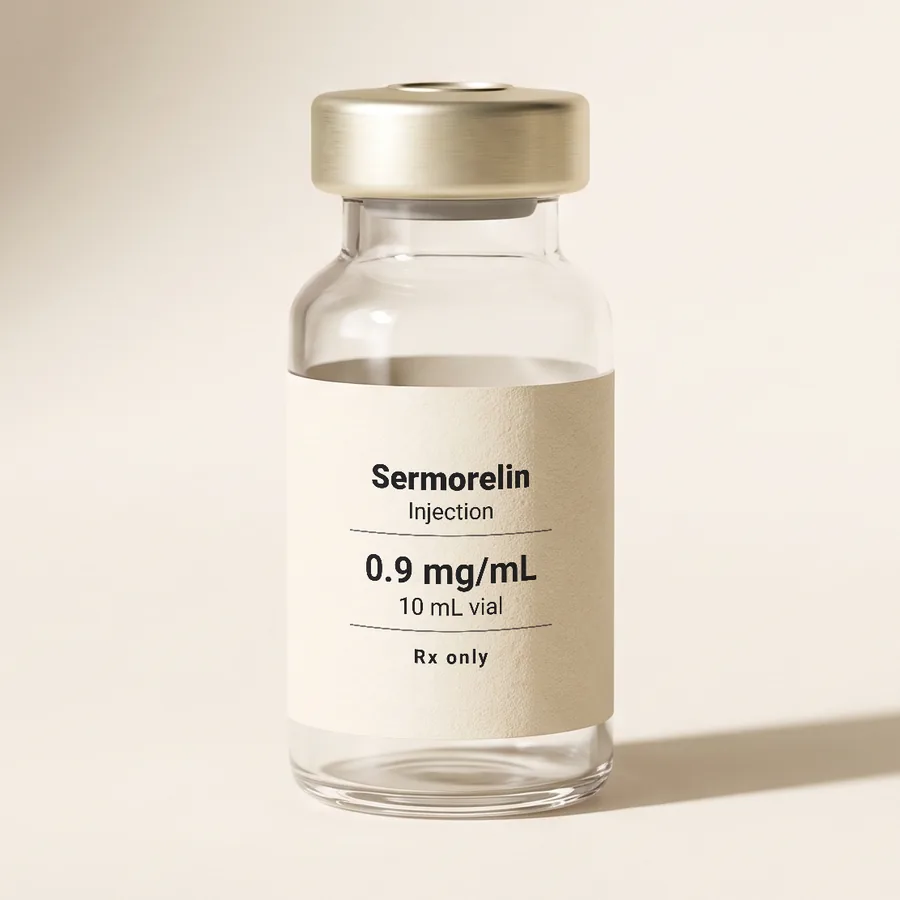
- A shot, not a pill. It goes in under the skin with a short, fine needle. Most people do it themselves at home, once their doctor has shown them how.
- A doctor decides. Nothing ships until a doctor licensed in your state has read your health form and written a prescription. Signing up does not guarantee one.
Sermorelin is a short piece of a hormone your brain makes called growth hormone releasing hormone. Your hypothalamus sends that hormone to tell the pituitary gland when to let growth hormone out. Sermorelin is the part of it that carries the instruction. The molecule has an approval history, though not in the form we make. A sermorelin product called Geref was approved in 1997 and came off the market around 2008. The FDA recorded that it was not pulled for safety or effectiveness reasons. That finding is why a pharmacy can still make sermorelin today.
How it works
Sermorelin gives your pituitary gland the signal rather than the hormone. The gland then releases growth hormone it had already made and stored. Because the message still runs through your own system, your own brakes stay in place: your body can push back on the signal and quieten the next release. Injected growth hormone skips all of that, which is how people end up with far more of it than the body would ever make on its own.
What the evidence shows
The distance between what researchers have shown and what this molecule gets marketed on is wide, so here is the split.
Sermorelin raises growth hormone and IGF-1 in adults on an appropriate dose. That effect is measurable and it reproduces.
Whether that chemical change actually gives you what you want from it is a different question, and the evidence there is weaker. The approval trials ran in children with growth hormone deficiency, not in adults chasing body composition or better sleep. Adult age-management use is off-label, and the literature behind it consists mostly of small studies tracking IGF-1 rather than large trials tracking strength, function or how people feel.
Measure your own IGF-1 before and after. For your case that beats the published work.
Who it's for
People ask about sermorelin when they would rather work through their own pituitary gland than inject growth hormone from outside. It is a slow one, judged over months rather than felt the same evening, so it suits people willing to keep measuring. Wanting more growth hormone is not on its own a reason to prescribe it, and your doctor decides.
What to expect, and when
IGF-1 moves first, inside the first several weeks, and early on you cannot verify anything else.
Subjective change takes longer and varies between people. Your provider reassesses at around three months, which is why these protocols run in months rather than weeks.
We will not quote you a figure for fat lost or sleep gained. It depends on your starting labs, your age, your sleep and your training, and the published work does not support a specific number for any of that.
Storage and handling
Keep sermorelin refrigerated, out of direct light, and do not freeze it. The pharmacy assigns the storage instructions and the beyond-use date, and prints both on your label. Follow the label ahead of anything written here. Timing matters more than people expect.
Three steps.
Tell us about your health
Fill out a short health form online, whenever suits you. A doctor reads every answer before anything is prescribed.

A licensed doctor reviews it
A doctor licensed in your state reads your answers and decides if this is right for you. Signing up does not mean you will get a prescription.

National Health Rx ships it to your door
Your medicine is made to match your prescription and sent overnight to 49 states, with the supplies you need to use it. Texas is not available.

What you get.
- A visit with a licensed doctor, online
- Your prescription, if the doctor approves one
- Your medicine, made to order by National Health Rx
- The syringes, needles and wipes you need to use it
- Your care team, whenever you need them
How much to take, how often, and for how long are your doctor's call, and they print it on your label. The pharmacy sets the use-by date and prints that on your label too. Always go by your label.

Ready to find out if it is right for you?
- An online intake you can finish in a few minutes
- A doctor licensed in your state reads it
- Made to order and shipped by National Health Rx if you are approved
- Your care team stays reachable afterwards
Prescription only. A consultation does not guarantee a prescription. Compounded medications are not FDA-approved.
Common questions
Is sermorelin FDA approved?
Not as we dispense it: no compounded preparation is FDA-approved. The molecule itself has an approval history. Sermorelin was approved as Geref in 1997 for growth hormone deficiency in children. A separate diagnostic product had been approved in 1990. The branded product was discontinued for commercial reasons, but sermorelin remains an FDA-listed active ingredient eligible for compounding by a 503A pharmacy under a patient-specific prescription.
How much do I take?
Your doctor decides that and prints it on your label. We don't list doses here, because the right amount depends on you and on the exact product the pharmacy makes. Always go by your label.
Who shouldn't take it?
Your doctor decides that. They look at your health history, the medicines you already take, and why you want it, and they'll tell you if Sermorelin isn't a good fit. Tell them if you're pregnant or breastfeeding.
Are there side effects?
Any prescription medicine can have them. Your doctor will go over what to watch for before you start, and the paperwork that comes with your order lists them. If something worries you, call your care team. Don't wait for your next check-in.
Will it affect my other medicines?
It might, so list everything you take when you sign up, including vitamins and supplements. Checking that list is part of your doctor's job, and it's not something a web page can answer.
Is this FDA approved?
No. It's made to order for you by a licensed pharmacy, which is called compounding. The FDA doesn't review or approve compounded medicines, and they aren't generic versions of brand-name drugs.
Who makes it?
National Health Rx, a licensed 503A compounding pharmacy. That means they mix each order for one patient at a time.
Where do you ship?
We'll confirm yours when you sign up.
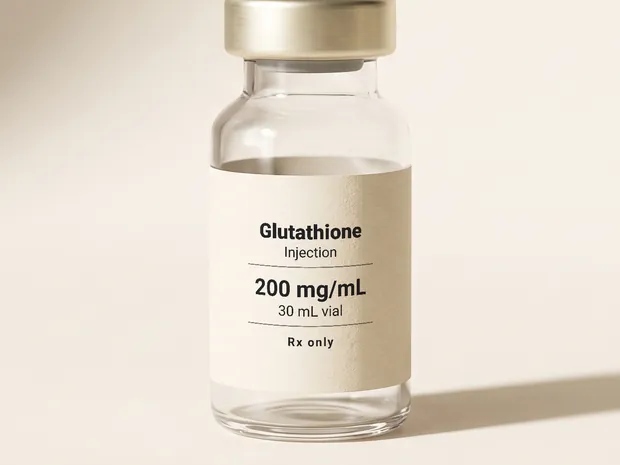
Glutathione
An antioxidant your body makes on its own. Given as a shot because it survives your gut poorly.
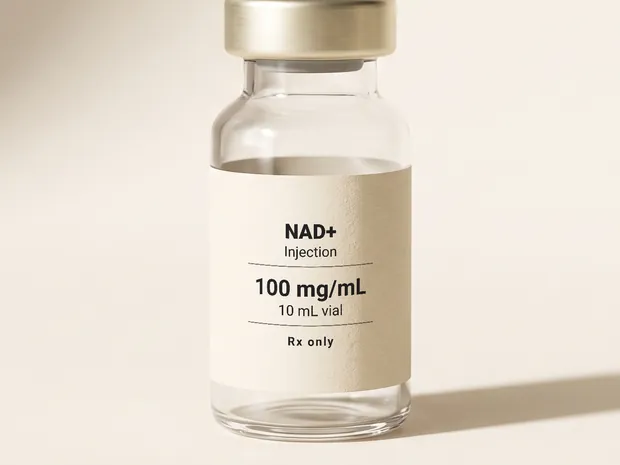
NAD+ Injectable
Your cells use NAD+ to turn food into energy, and you have less of it as you age. This is the shot form, because pills barely absorb.
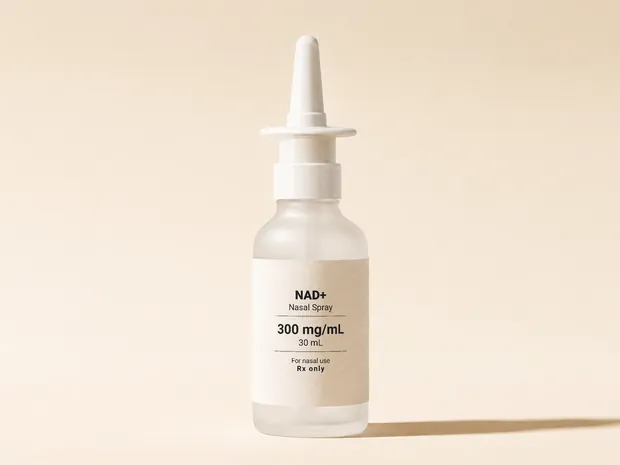
NAD+ Nasal Spray
The same NAD+ molecule as the shot, sprayed up the nose instead. For people who would rather not use a needle.